

Other
News NUS researchers develop advanced material for ultra-stable, high capacity rechargeable batteries
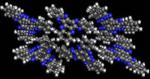
“Novel compound - 3Q - conducts electricity and retains energy better than other organic materials currently used in batteries A team of researchers from the National University of Singapore (NUS) has successfully designed a novel organic material of superior electrical conductivity and …

“Researchers from the National University of Singapore (NUS) have established new findings on the properties of two-dimensional molybdenum disulfide (MoS2), a widely studied semiconductor of the future. In two separate studies led by Professor Andrew Wee and Assistant Professor Andrivo …

“Within 15 minutes of meeting Mark Hersam, PhD, a renowned nanotechnology expert and professor of materials science and engineering at Northwestern University, Ethan Secor knew he wanted to work with him. Secor, a fifth year materials science and engineering PhD …
“Formed deep within the earth, stronger than steel, and thinner than a human hair. These comparisons aren’t describing a new super hero. They’re describing graphene, a substance that some experts have called “the most amazing and versatile” known …

“On an otherwise normal day in the lab, Eva Andrei didn’t expect to make a major discovery. Andrei, a physics professor at Rutgers University, was using graphite – the material in pencils – to calibrate a scanning tunneling microscope. As part …

“Scientists at the U.S. Department of Energy’s Ames Laboratory were able to successfully manipulate the electronic structure of graphene, which may enable the fabrication of graphene transistors— faster and more reliable than existing silicon-based transistors. The researchers were …
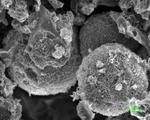
“Northern China’s roadsides are peppered with deciduous phoenix trees, producing an abundance of fallen leaves in autumn. These leaves are generally burned in the colder season, exacerbating the country’s air pollution problem. Investigators in Shandong, China, recently discovered …

“When many people try to squeeze through a passageway at the same time, it creates a bottleneck that slows everyone down. It turns out the reverse is true for electrons, which can move through small openings more quickly when travelling …
“From smart socks to workout clothes that measure exertion, wearable body sensors are becoming the latest “must-have” technology. Now scientists report they are on the cusp of using silk, one of the world’s most coveted fabrics, to develop a …
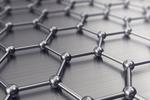
“Carnegie Mellon University’s Ge Yang, associate professor of biomedical engineering (BME) and computational biology, and Tzahi Cohen-Karni, assistant professor of BME and materials science and engineering, have determined that graphene is safe for neurons and non-neuronal cells and has …