

Other
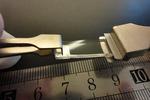
“Researchers at MIT and several other institutions have developed a method for making photonic devices — similar to electronic devices but based on light rather than electricity — that can bend and stretch without damage. The devices could find uses in cables …
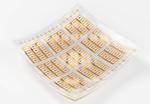
“A flexible detector for terahertz frequencies has been developed by Chalmers researchers using graphene transistors on plastic substrates. It is the first of its kind, and can extend the use of terahertz technology to applications that will require flexible electronics …

“Researchers at the National Graphene Institute (NGI) at The University of Manchester have succeeded in fabricating tiny slits in a new membrane that are just several angstroms (0.1nm) in size. This has allowed the study of how various ions …
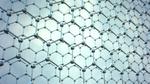
“Graphene – a one-atom-thick layer of the stuff in pencils – is a better conductor than copper and is very promising for electronic devices, but with one catch: Electrons that move through it can’t be stopped. Until now, that is. Scientists …

“RMIT researchers have used liquid metal to create two-dimensional materials no thicker than a few atoms that have never before been seen in nature. The incredible breakthrough will not only revolutionise the way we do chemistry but could be applied …
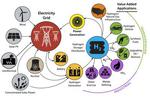
“While hydrogen is often talked about as a pollution-free fuel of the future, especially for use in fuel cell electric vehicles, hydrogen can be used for much more than zero-emission cars. In fact, from enhancing the flexibility of the grid …

“Huge investments are being made in quantum technology around the world. Denmark is among the nations that have joined the global race, where the winners will be those who master the peculiar science of quantum mechanics while successfully making a …
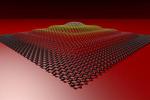
“Researchers from Finland and Taiwan have discovered how graphene, a single-atom-thin layer of carbon, can be forged into three-dimensional objects by using laser light. A striking illustration was provided when the researchers fabricated a pyramid with a height of 60 …

“How we use and generate electricity has changed dramatically over the past century yet the basic components that control its flow remain remarkably similar. Researchers at KAUST have now developed a novel type of component that could improve the performance …

“Scientists supported by EU funding, have created a graphene-based device where electron spins can be injected and detected, with unprecedented efficiency and at room temperature. This opens up possibilities for the realisation of applications which use spin based logic and …