

Other
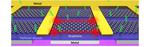
“Discovery could lead to revolutionary handheld disease diagnostic system Researchers from the University of Minnesota College of Science and Engineering have found yet another remarkable use for the wonder material graphene—tiny electronic “tweezers” that can grab biomolecules floating in …

“Novel defect control in graphene enables direct imaging of trapped electrons that follow Einstein’s rules. The Science Imaging electrons can help scientists better understand exotic electronic states, such as electricity that travels through wires without loss. The team created …
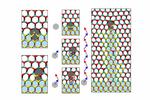
““Two-dimensional materials” — materials deposited in layers that are only a few atoms thick — are promising for both high-performance electronics and flexible, transparent electronics that could be layered onto physical surfaces to make computing ubiquitous. The best-known 2-D material is graphene …

“Transistors based on carbon nanostructures: what sounds like a futuristic dream could be reality in just a few years’ time. An international research team working with Empa has now succeeded in producing nanotransistors from graphene ribbons that are only a …
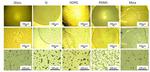
“TPU scientist Raul Rodrigez and his colleagues from Lithuania and Germany were the first in the world to suggest how with the help of graphene oxide, in fact ordinary graphene as in pencils, but oxidized to make the surface of …
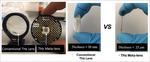
“On the quest for miniaturization, scientists at the Center for Integrated Nanostructure Physics, within the Institute for Basic Science (IBS, South Korea), in collaboration with researchers from the University of Birmingham and the Korea Advanced Institute of Science and Technology …
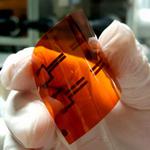
“A simple technique for mass producing ultrathin, high-quality molybdenum trioxide nanosheets could lead to next-generation electronic and optoelectronic devices Molybdenum trioxide (MoO3) has potential as an important two-dimensional (2D) material, but its bulk manufacture has lagged behind that of others …

“Manchester scientists use graphene water filter to turn whisky clear Previously graphene-oxide membranes were shown to be completely impermeable to all solvents except for water. However, a study published in Nature Materials, now shows that we can tailor the molecules …

“An international team of scientists has discovered a new route to ultra-low-power transistors using a graphene-based composite material. As transistors are squeezed into ever smaller areas within computer chips, the semiconductor industry struggles to contain overheating in devices. Now researchers …
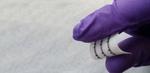
“Researchers have successfully incorporated washable, stretchable and breathable electronic circuits into fabric, opening up new possibilities for smart textiles and wearable electronics. The circuits were made with cheap, safe and environmentally friendly inks, and printed using conventional inkjet printing techniques …