

Other
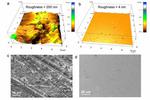
“Most of today’s lithium-ion batteries, which power everything from cars to phones, use a liquid as the electrolyte between two electrodes. Using a solid electrolyte instead could offer major advantages for both safety and energy storage capacity, but attempts …
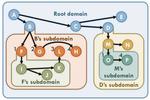
“System enables large speedups — as much as 88-fold — on common parallel-computing algorithms. The chips in most modern desktop computers have four “cores,” or processing units, which can run different computational tasks in parallel. But the chips of the future could …
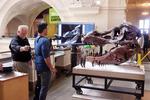
“Last year, a team of forensic dentists got authorization to perform a 3-D scan of the prized Tyrannosaurus rex skull at the Field Museum of Natural History in Chicago, in an effort to try to explain some strange holes in …
“As embedded intelligence is finding its way into ever more areas of our lives, fields ranging from autonomous driving to personalized medicine are generating huge amounts of data. But just as the flood of data is reaching massive proportions, the …

“Neural networks, which learn to perform computational tasks by analyzing large sets of training data, are responsible for today’s best-performing artificial intelligence systems, from speech recognition systems, to automatic translators, to self-driving cars. But neural nets are black boxes …
“Trees and other plants, from towering redwoods to diminutive daisies, are nature’s hydraulic pumps. They are constantly pulling water up from their roots to the topmost leaves, and pumping sugars produced by their leaves back down to the roots …

“Science fiction is full of fanciful devices that allow light to interact forcefully with matter, from light sabers to photon-drive rockets. In recent years, science has begun to catch up; some results hint at interesting real-world interactions between light and …
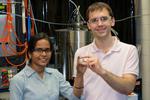
“MIT researchers have identified the proper temperature and chemical mixture to selectively separate pure copper and other metallic trace elements from sulfur-based minerals using molten electrolysis. This one-step, environmentally friendly process simplifies metal production and eliminates the toxic byproducts such …
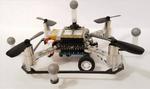
“Being able to both walk and take flight is typical in nature — many birds, insects, and other animals can do both. If we could program robots with similar versatility, it would open up many possibilities: Imagine machines that could fly …
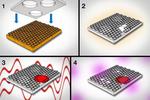
“Dialysis, in the most general sense, is the process by which molecules filter out of one solution, by diffusing through a membrane, into a more dilute solution. Outside of hemodialysis, which removes waste from blood, scientists use dialysis to purify …