

Other

“When organic chemists identify a useful chemical compound — a new drug, for instance — it’s up to chemical engineers to determine how to mass-produce it. There could be 100 different sequences of reactions that yield the same end product. But …
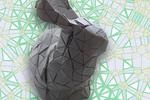
“In a 1999 paper, Erik Demaine — now an MIT professor of electrical engineering and computer science, but then an 18-year-old PhD student at the University of Waterloo, in Canada — described an algorithm that could determine how to fold a piece …

“Hundreds of millions of pieces of space junk orbit the Earth daily, from chips of old rocket paint, to shards of solar panels, and entire dead satellites. This cloud of high-tech detritus whirls around the planet at about 17,500 …
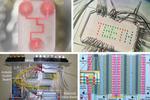
“A new MIT-designed open-source website might well be the Pinterest of microfluidics. The site, Metafluidics.org, is a free repository of designs for lab-on-a-chip devices, submitted by all sorts of inventors, including trained scientists and engineers, hobbyists, students, and …

““Deep learning” computer systems, based on artificial neural networks that mimic the way the brain learns from an accumulation of examples, have become a hot topic in computer science. In addition to enabling technologies such as face- and voice-recognition software …

“The MIT AgeLab will build and analyze new deep-learning-based perception and motion planning technologies for automated vehicles in partnership with the Toyota Collaborative Safety Research Center (CSRC). The new research initiative, called CSRC Next, is part of a five-year-old ongoing …
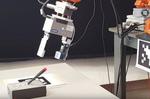
“Eight years ago, Ted Adelson’s research group at MIT’s Computer Science and Artificial Intelligence Laboratory (CSAIL) unveiled a new sensor technology, called GelSight, that uses physical contact with an object to provide a remarkably detailed 3-D map of …

“The collision of a pair of colossal, stellar-mass black holes has made itself heard, nearly 3 billion light years away, through a cosmic microphone on Earth. On Jan. 4, the Laser Interferometry Gravitational-wave Observatory (LIGO) picked up a barely perceptible …
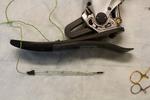
“A new surgical technique devised by MIT researchers could allow prosthetic limbs to feel much more like natural limbs. Through coordination of the patient’s prosthetic limb, existing nerves, and muscle grafts, amputees would be able to sense where their …
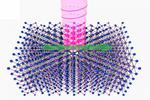
“Mid-infrared wavelengths of light are invisible to the eye but can be useful for a number of technologies, including night vision, thermal sensing, and environmental monitoring. Now, a new phenomenon in an unconventional metal, found by physicists at MIT and …