

Other

“Today’s 3-D printers have a resolution of 600 dots per inch, which means that they could pack a billion tiny cubes of different materials into a volume that measures just 1.67 cubic inches. Such precise control of printed …
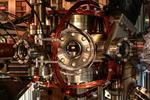
“Researchers have taken an important step toward the long-sought goal of a quantum computer, which in theory should be capable of vastly faster computations than conventional computers, for certain kinds of problems. The new work shows that collections of ultracold …

“Imagine a future in which solar cells are all around us — on windows and walls, cell phones, laptops, and more. A new flexible, transparent solar cell developed at MIT is bringing that future one step closer. The device combines low-cost …

“Almost every object we use is developed with computer-aided design (CAD). Ironically, while CAD programs are good for creating designs, using them is actually very difficult and time-consuming if you’re trying to improve an existing design to make the …

“There are few things social media users love more than flooding their feeds with photos of food. Yet we seldom use these images for much more than a quick scroll on our cellphones. Researchers from MIT’s Computer Science and …

“In recent years, the best-performing artificial-intelligence systems — in areas such as autonomous driving, speech recognition, computer vision, and automatic translation — have come courtesy of software systems known as neural networks. But neural networks take up a lot of memory and …

“Access to clean, safe water is one of the world’s pressing needs, yet today’s water distribution systems lose an average of 20 percent of their supply because of leaks. These leaks not only make shortages worse but also …

“In recent years, engineers have worked to shrink drone technology, building flying prototypes that are the size of a bumblebee and loaded with even tinier sensors and cameras. Thus far, they have managed to miniaturize almost every part of a …

“Virtually any modern information-capture device — such as a camera, audio recorder, or telephone — has an analog-to-digital converter in it, a circuit that converts the fluctuating voltages of analog signals into strings of ones and zeroes. Almost all commercial analog-to-digital converters …

“Opaque and potentially biased mathematical models are remaking our lives—and neither the companies responsible for developing them nor the government is interested in addressing the problem. This week a group of researchers, together with the American Civil Liberties Union …