

Other

“Electric vehicles and most electronic devices, such as cell phones and laptop computers, are powered by lithium-ion batteries. Until now, manufacturers have had to design their devices around the size and shape of commercially available batteries. But researchers have developed …
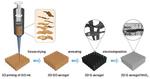
“Advances in supercapacitor technology could lead to wider use of fast-charging energy storage devices and novel designs for electronic gadgets Scientists at UC Santa Cruz and Lawrence Livermore National Laboratory (LLNL) have reported unprecedented performance results for a supercapacitor electrode …

“Graphene Flagship researchers have shown in a paper published in Science Advances how heterostructures built from graphene and topological insulators have strong, proximity induced spin-orbit coupling which can form the basis of novel information processing technologies. Spin-orbit coupling is at …

“Researchers from the Cambridge Graphene Centre, together with industrial and academic collaborators within the European Graphene Flagship project, showed that integrated graphene-based photonic devices offer a solution for the next generation of optical communications. The researchers have demonstrated how properties …
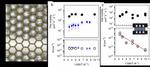
“A group of scientists has observed for the first time band-like electron transport in a conjugated two-dimensional (2D) metal-organic framework film (Nature Materials, “High-mobility band-like charge transport in a semiconducting two-dimensional metal–organic framework”). This semiconducting behavior, together with its …

“Graphene enables ultra-wide bandwidth communications coupled with low power consumption, with potential to surpass the needs of 5G, IoT and Industry 4.0. Researchers within the Graphene Flagship project, one of the biggest research initiatives of the European Commission, showed …

“In a refreshing change of perspective, theoretical physicist Dr Zeila Zanolli has looked at the proximity effects of graphene on a magnetic semiconducting substrate, finding it to affect the substrate’s magnetism down to several layers below the surface. Her …

“Efficient method for making single-atom-thick, wafer-scale materials opens up opportunities in flexible electronics. Since the 2003 discovery of the single-atom-thick carbon material known as graphene, there has been significant interest in other types of 2-D materials as well. These materials …
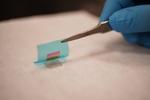
“The vast majority of computing devices today are made from silicon, the second most abundant element on Earth, after oxygen. Silicon can be found in various forms in rocks, clay, sand, and soil. And while it is not the best …
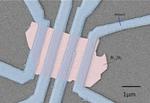
“The special properties of ‘topological materials’ typically occur at their surface. These materials, for example insulators that do conduct current at their surface, are expected to play a major role in future quantum computers. Scientists of the University of Twente …