

Other
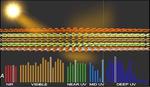
“High-performance computing helps to survey optical qualities of atom-thick materials for optoelectronics. The ability of metallic or semiconducting materials to absorb, reflect and act upon light is of primary importance to scientists developing optoelectronics – electronic devices that interact with light …

“One in five mobile phone users in the UK have cracked their screen by dropping the phone in a three year period, according to a YouGov poll. The mobile screens break easily because they are usually made from an oxide …
News Graphene enables clock rates in the terahertz range: researchers pave the way for nanoelectronics of the future

“Graphene – an ultrathin material consisting of a single layer of interlinked carbon atoms – is considered a promising candidate for the nanoelectronics of the future. In theory, it should allow clock rates up to a thousand times faster than today’s …

“Better understanding of the wetting characteristics of phosphorene could pave the way for new applications in biological engineering A technique for investigating the wetting behavior of water on phosphorene — the single layer form of black phosphorus — has been developed by …
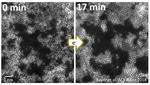
“Atomically thin crystals will play an ever greater role in future – but how can their crystallisation process be controlled? A new method is now opening up new possibilities. They are among the thinnest structures on earth: “two dimensional materials” are …

“The table groups molecules according to the nano-shapes they form The approach was developed by Daniel Packwood of Kyoto University’s Institute for Integrated Cell-Material Sciences (iCeMS) and Taro Hitosugi of the Tokyo Institute of Technology. It involves connecting the …
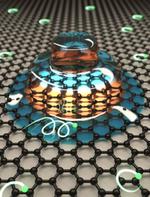
“In a marriage of quantum science and solid-state physics, researchers at the National Institute of Standards and Technology (NIST) have used magnetic fields to confine groups of electrons to a series of concentric rings within graphene, a single layer of …

“One of the oldest, most versatile and inexpensive of materials — paper — seemingly springs to life, bending, folding or flattening itself, by means of a low-cost actuation technology developed at Carnegie Mellon University’s Human-Computer Interaction Institute. A thin layer of …

“Degradation of pristine graphene occurs in the human body when interacting with a naturally occurring enzyme found in the lung, announced Graphene Flagship partners; the French National Centre for Scientific Research (CNRS), University of Strasbourg, Karolinska Institute and University of …
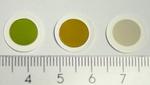
“Researchers present a technique to produce large quantities of pristine single-walled carbon nanotubes in select shades of the rainbow. The secret is a fine-tuned fabrication process—and a small dose of CO2. Single-walled carbon nanotubes, or sheets of one atom-thick …