

Other
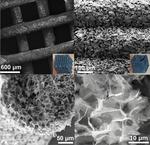
“For the first time, a team of researchers, from the School of Materials and the National Graphene Institute at The the University of Manchester have formulated inks using the 2D material MXene, to produce 3D printed interdigitated electrodes. As published …
News First-ever visualisations of electrical gating effects on electronic structure could lead to longer-lasting devices
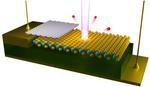
“Electronic structure of a semiconductor device – how it behaves when voltage is applied – visualised for the first time Insights from the technique will help development of high performance electronics with low power consumption University of Warwick and University of Washington …
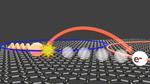
“A team of researchers from the Universities of Manchester, Nottingham and Loughborough have discovered quantum phenomena that helps to understand the fundamental limits of graphene electronics. As published in Nature Communications, the work describes how electrons in a single atomically-thin …
News New research highlights similarities in the insulating states of twisted bilayer graphene and cuprates

“In recent decades, enormous research efforts have been expended on the exploration and explanation of high-temperature (high-Tc) superconductors, a class of materials exhibiting zero resistance at particularly high temperatures. Now a team of scientists from the United States, Germany and …
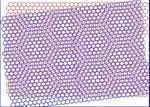
“Rutgers-led research could help reduce energy use, improve electronic devices When two mesh screens are overlaid, beautiful patterns appear when one screen is offset. These “moiré patterns” have long intrigued artists, scientists and mathematicians and have found applications in printing …
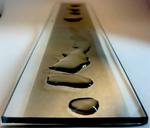
“Oxide layer atop nanometal layer results in electron shuttle, not corrosion Scientists from Northwestern University and Caltech have produced electricity by simply flowing water over extremely thin layers of inexpensive metals, including iron, that have oxidized. These films represent an …

“Rust is a common problem on infrastructure, but new research shows that when it’s combined with salt water, it can also be a source of electricity. There are many ways to generate electricity—batteries, solar panels, wind turbines, and …
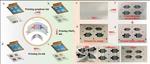
“Increasing development of micro-scale electronics has stimulated demand of the corresponding micro-scale power sources, especially for micro-batteries (MBs). However, complex manufacturing process and poor flexibility of the traditional stacked batteries have hindered their practical applications. Planar MBs have recently garnered …
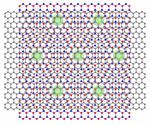
“What’s thinner than a human hair but has a depth of special traits? A multitasking graphene device developed by researchers at the U.S. Department of Energy’s Lawrence Berkeley National Laboratory (Berkeley Lab). The superthin material easily switches …
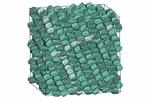
“In work that upends materials design, researchers have demonstrated with computer simulations that they can design a crystal and work backward to the particle shape that will self-assemble to create it. It could lead to a new class of materials …