







Other

“From simply sweeping an object back and forth to adding steering to your robot or R/C car, hobby servos are a great way to add some motion to your next project. Servos allow you to easily control the speed …

“Oscilloscope made using the Arduino and OLED 0.96 “display i2c. The oscilloscope has 4 buttons: the first is used to switch between options, the next two are used to change the value smaller / larger, the fourth button freezes the …
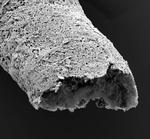
“An international team of scientists have discovered a new material that can be 3D printed to create tissue-like vascular structures. In a new study published today in Nature Communications, led by Professor Alvaro Mata at the University of Nottingham and …

“Scientists have made a breakthrough in the search for a new, sustainable permanent magnet. Most permanent magnets are made from alloys of rare earth metals - but the mining and processing of these materials produces toxic by-products, leading to ecological challenges …
News Bristol discovery is significant step toward developing electronics for extreme energy efficiency

“Researchers at the University of Bristol have come up with a new type of nanoelectromechanical relay to enable reliable, high-temperature, non-volatile memory. The work, which is reported in Nature Communications, was carried out in collaboration with the University of Southampton …
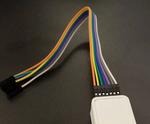
“This instructable is for a ATTiny fuse editor using an ESP8266 and a browser based user interface.This makes changing any of the settings controlled by the 2 fuse bytes a very simple activity. The device has the following features …
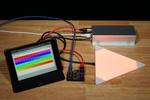
“This project uses an Adafruit Feather M0 Basic Proto board to control a group of Color Kinetics or other RGB light fixtures using the DMX-512 protocol. We’ll build a DMX-512 interface FeatherWing then connect it to the …
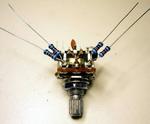
“This is a crossfader circuit. It accepts two inputs and fades between them, with the output being a mix of the two inputs (or just one of the inputs). It’s a simple circuit, very useful, and easy to build …

“Researchers have generated a wide range of colours from a single laser after discovering a new process for achieving so-called ‘supercontinuum generation’. Supercontinuum generation is when intense laser light of one colour travels within a material, like glass, and broadens …

“Physicists use extreme infrared laser pulses to reveal frozen electron waves in magnetite. Magnetite is the oldest magnetic material known to humans, yet researchers are still mystified by certain aspects of its properties. For example, when the temperature is lowered …