

Other
News Stanford researchers say extracting uranium from seawater could help nuclear power play a larger role in a carbon-free energy future
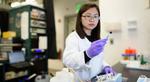
“As the world shifts from fossil fuels, additional sources of energy-on-demand will be needed to make up for lulls in wind or solar. A new way of extracting uranium from seawater could help even countries without uranium mines harness nuclear …
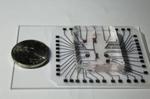
“Researchers at the Stanford University School of Medicine have developed a way to produce a cheap and reusable diagnostic “lab on a chip” with the help of an ordinary inkjet printer. At a production cost of as little as 1 …
News Stanford researchers create a high-performance, low-energy artificial synapse for neural network computing
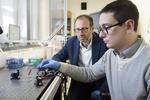
“For all the improvements in computer technology over the years, we still struggle to recreate the low-energy, elegant processing of the human brain. Now, researchers at Stanford University and Sandia National Laboratories have made an advance that could help computers …
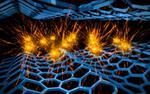
“Scientists at the Department of Energy’s SLAC National Accelerator Laboratory and Stanford University have discovered a potential way to make graphene – a single layer of carbon atoms with great promise for future electronics – superconducting, a state in which it …
News Inspired by a whirligig toy, Stanford bioengineers develop a 20-cent, hand-powered blood centrifuge
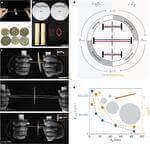
“Here’s how to build a whirligig: Thread a loop of twine through two holes in a button. Grab the loop ends, then rhythmically pull. As the twine coils and uncoils, the button spins at a dizzying speed. Now, using …

“For more than 50 years, silicon chipmakers have devised inventive ways to switch electricity on and off, generating the digital ones and zeroes that encode words, pictures, movies and other forms of data. But as researchers think about electronics for …
News Miniature WiFi device developed by Stanford engineers supplies missing link for the Internet of Things

“Futurists and technology prognosticators have been known to make starry-eyed projections about the so-called Internet of Things. It ‘s a vision of a world where everything - from implantable biosensors and wearable devices to smart cars and smart home sensors - confers …
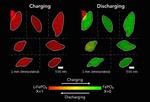
“Better batteries that charge quickly and last a long time are a brass ring for engineers. But despite decades of research and innovation, a fundamental understanding of exactly how batteries work at the smallest of scales has remained elusive. In …
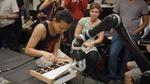
“After learning new software and programming languages, Stanford students in the Artificial Intelligence Laboratory have an opportunity to choose a creative task and design a robot to perform the task for demonstration. The tasks call for a wide range of …
News Maiden voyage of Stanford’s humanoid robotic diver recovers treasures from King Louis XIV’s wrecked flagship
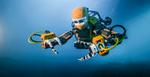
“Oussama Khatib held his breath as he swam through the wreck of La Lune, 100 meters below the Mediterranean. The flagship of King Louis XIV sank here in 1664, 20 miles off the southern coast of France, and no human …