

Other

“Researchers at the Samsung Advanced Institute of Technology (SAIT) have unveiled the discovery of a new material, called amorphous boron nitride (a-BN), in collaboration with Ulsan National Institute of Science and Technology (UNIST) and the University of Cambridge. Published …
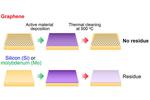
“Photocathodes that produce electron beams for electron microscopes and advanced accelerators can be refreshed and rebuilt repeatedly without opening the devices that rely on them, provided the electron emitting materials are deposited on single-atom-thick layers of carbon known as graphene …

“Graphene Nanoribbons might soon be much easier to produce. An international research team led by Martin Luther University Halle-Wittenberg (MLU), the University of Tennessee and Oak Ridge National Laboratory in the U.S. has succeeded in producing this versatile material …
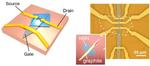
“The ability to precisely manipulate individual charge carriers is a cornerstone for single-electron transistors and for electronic devices of the future, including solid-state quantum bits (qubits). Quantum dots (QDs) are at the heart of these devices. In a recent Nano …
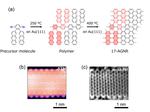
“World’s widest graphene nanoribbon promises the next generation of miniaturized electronics Materials Science 2020/07/01 With literally the thickness of one carbon atom and electrical properties that can surpass those of standard semiconductor technologies, graphene nanoribbons promise a …
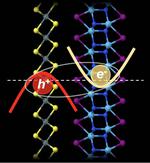
“Mixing and matching computational models of 2D materials led scientists at Rice University to the realization that excitons — quasiparticles that exist when electrons and holes briefly bind — can be manipulated in new and useful ways. The researchers identified a small …
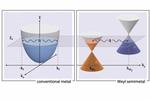
“Exotic states called Kohn anomalies could offer clues to why some materials have the electronic properties they do. An exotic physical phenomenon known as a Kohn anomaly has been found for the first time in an unexpected type of material …
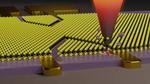
“EPFL researchers have developed a high-precision technology that enables them to carve nanometric patterns into two-dimensional materials. With their pioneering nanotechnology, EPFL researchers have achieved the impossible. They can now use heat to break the links between atoms with a …
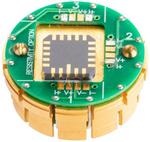
“First isolated in 2004 by physicists at the University of Manchester using pieces of sticky tape and a graphite block, the one-atom-thick carbon allotrope graphene has been touted as a wonder material on account of its exceptional electrical, thermal and …

“ew research on the two-dimensional (2D) material graphene has allowed researchers to create smart adaptive clothing which can lower the body temperature of the wearer in hot climates. A team of scientists from The University of Manchester’s National Graphene …