

Other

“An international team of scientists from NUST MISIS, Russian Academy of Science and the Helmholtz-Zentrum Dresden-Rossendorf found that instead of lithium (Li), sodium (Na) “stacked” in a special way can be used for batteries production. Sodium batteries will be significantly …
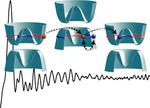
“In combined theoretical and experimental work, ETH physicists introduce and demonstrate a novel mechanism for electron optics in two-dimensional solid-state systems. The discovery opens up a route to engineering quantum-optical phenomena in a variety of materials and …
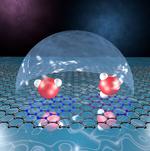
“The study led by VCU researchers addresses an important area for medicine, industry and science: Understanding how liquids — mainly water — interact with surfaces. A recently published study led by Virginia Commonwealth University researchers sheds new light on how water interacts …
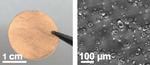
“Rice scientists stick to their laser guns to improve lithium metal technology Where things get sticky happens to be where interesting science happens in a Rice University lab working to improve battery technology. Using techniques similar to those they employed …
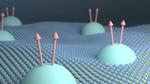
“Columbia researchers first to discover a quantum fluid—fractional quantum Hall states, one of the most delicate phases of matter—in a monolayer 2D semiconductor; finding could provide a unique test platform for future applications in quantum computing Columbia University …
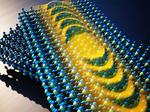
“When you switch on a standard light bulb, the light from it radiates outwards in all directions in much the same way as rings form when a stone is dropped into a pond. Similarly, as the ripples on the pond …
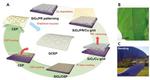
“A research team, led by Professor Hyesung Park in the School of Energy and Chemical Engineering at UNIST has unveiled a flexible metal grid-based hybrid electrode platform by using a Cu grid-embedded polyimide (CEP) film with a graphene sheet as …

“Due to the wide application of photodetectors in the fields including optical communication, environmental monitoring, and image sensing, the research for developing highly efficient photodetectors has attracted extensive attention over the past decades. Since 2009, methyl ammonium lead halide (CH3NH3PbX3 …
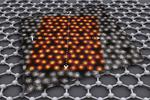
“To fully exploit the potential of the “wonder material” graphene, it has to be combined with other materials. A new study investigates what is important for this. Graphene consists of a single layer of carbon atoms. Exceptional electronic, thermal, mechanical …
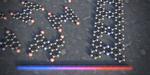
“A team of physicists and chemists has produced the first porous graphene ribbons in which specific carbon atoms in the crystal lattice are replaced with nitrogen atoms. These ribbons have semiconducting properties that make them attractive for applications in electronics …