

Other

“Device for harnessing terahertz radiation might enable self-powering implants, cellphones, other portable electronics. Any device that sends out a Wi-Fi signal also emits terahertz waves —electromagnetic waves with a frequency somewhere between microwaves and infrared light. These high-frequency radiation waves …
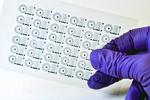
“Technique may enable speedy, on-demand design of softer, safer neural devices. The brain is one of our most vulnerable organs, as soft as the softest tofu. Brain implants, on the other hand, are typically made from metal and other rigid …
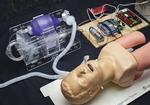
“We are one of several teams who recognized the challenges faced by Italian physicians, and are working to find a solution to the anticipated global lack of ventilators. In the US alone, the COVID-19 pandemic may cause ventilator shortages …

“Using a photorealistic simulation engine, vehicles learn to drive in the real world and recover from near-crash scenarios. A simulation system invented at MIT to train driverless cars creates a photorealistic world with infinite steering possibilities, helping the cars learn …

“Physicists use extreme infrared laser pulses to reveal frozen electron waves in magnetite. Magnetite is the oldest magnetic material known to humans, yet researchers are still mystified by certain aspects of its properties. For example, when the temperature is lowered …

“System “recruits” defects that usually cause disruptions, using them to instead carry out quantum operations. In an advance that may help researchers scale up quantum devices, an MIT team has developed a method to “recruit” neighboring quantum bits made of …

“Computer model of face processing could reveal how the brain produces richly detailed visual representations so quickly. When we open our eyes, we immediately see our surroundings in great detail. How the brain is able to form these richly detailed …
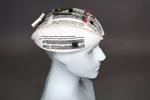
“In place of flat “breadboards,” 3D-printed CurveBoards enable easier testing of circuit design on electronics products. MIT researchers have invented a way to integrate “breadboards” — flat platforms widely used for electronics prototyping — directly onto physical products. The aim is to …
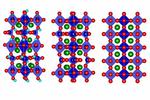
“Most materials have a fixed ability to conduct heat, but applying voltage to this thin film changes its thermal properties drastically. Materials whose electronic and magnetic properties can be significantly changed by applying electrical inputs form the backbone of all …
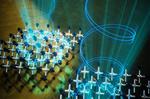
“Method with polarized light can create and measure nonsymmetrical states in a layered material. Some molecules, including most of the ones in living organisms, have shapes that can exist in two different mirror-image versions. The right- and left-handed versions can …