

Other
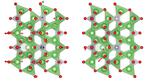
“By selectively heating specific phonons without heating the entire material, researchers have enhanced ion diffusion in a way that could have broad applications. Batteries and fuel cells often rely on a process known as ion diffusion to function. In ion …

“Study yields clues into how nitrogenase, an enzyme critical for life, converts nitrogen into ammonia. Nitrogen, an element that is essential for all living cells, makes up about 78 percent of Earth’s atmosphere. However, most organisms cannot make use …

“If you see a self-driving car out in the wild, you might notice a giant spinning cylinder on top of its roof. That’s a lidar sensor, and it works by sending out pulses of infrared light and measuring the …

“Work helps answer 30-year-old questions, could lead to better medical diagnostics, more Physicists from across three continents report the first experimental evidence to explain the unusual electronic behavior behind the world’s thinnest superconductor, a material with myriad applications because …
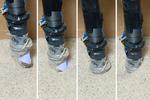
“The technology uses tactile sensing to identify objects underground, and might one day help disarm land mines or inspect cables. Over the years, robots have gotten quite good at identifying objects — as long as they’re out in the open …

“Benton Calhoun SM ‘02 PhD ‘06 and David Wentzloff SM ‘02 PhD ‘07 are co-founders of Everactive, which uses wireless sensing to provide continuous remote monitoring for the industrial internet of things. When Ben Calhoun and Dave Wentzloff co-founded Everactive …

“New results point to unexpected, illegal production of several CFCs in recent years. MIT scientists have found that ozone-depleting chlorofluorocarbons, or CFCs, stay in the atmosphere for a shorter amount of time than previously estimated. Their study suggests that CFCs …
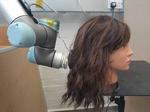
“Robotic arm equipped with a hairbrush helps with brushing tasks and could be an asset in assistive-care settings. With rapidly growing demands on health care systems, nurses typically spend 18 to 40 percent of their time performing direct patient care …
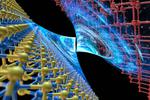
“Atomically thin materials are a promising alternative to silicon-based transistors; now researchers can connect them more efficiently to other chip elements. Moore’s Law, the famous prediction that the number of transistors that can be packed onto a microchip will …

“With just 50 lines of code, the program spots and fixes likely errors. MIT researchers have created a new system that automatically cleans “dirty data” — the typos, duplicates, missing values, misspellings, and inconsistencies dreaded by data analysts, data engineers, and …