

Other
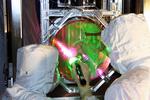
“The results open possibilities for studying gravity’s effects on relatively large objects in quantum states. To the human eye, most stationary objects appear to be just that — still, and completely at rest. Yet if we were handed a quantum …
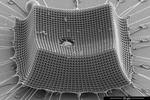
“The new carbon-based material could be a basis for lighter, tougher alternatives to Kevlar and steel. A new study by engineers at MIT, Caltech, and ETH Zürich shows that “nanoarchitected” materials — materials designed from precisely patterned nanoscale structures — may be …
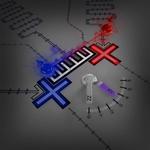
“MIT researchers make a major advance toward fully realizing quantum computation. MIT researchers have made a significant advance on the road toward the full realization of quantum computation, demonstrating a technique that eliminates common errors in the most essential operation …
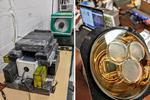
“MIT team devises compact, affordable system for identifying elemental composition of nuclear and other materials. About five years ago, Areg Danagoulian, associate professor in the MIT Department of Nuclear Science and Engineering (NSE), became intrigued by a technique developed by …

“Algorand uses a unique architecture developed by MIT Professor Silvio Micali to offer a decentralized, secure, and scalable blockchain. The Republic of the Marshall Islands is a country of around 50,000 people spread across more than 1,000 islands …

“With thousands of satellites, each network could beam down tens of terabits per second, filling gaps left by land-based services. The team estimated each network’s total throughput based on the most recent petitions filed by each company to the …
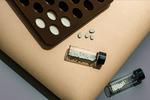
“Chemical engineers have found a way to load more drug into a tablet, which could then be made smaller and easier to swallow. About 60 percent of drugs on the market have hydrophobic molecules as their active ingredients. These drugs …

“A new material made from carbon nanotubes can generate electricity by scavenging energy from its environment. MIT engineers have discovered a new way of generating electricity using tiny carbon particles that can create a current simply by interacting with liquid …
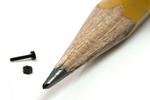
“Professor Nicholas Fang’s startup Boston Micro Fabrication uses a novel light-focusing method to make ultraprecise printers. Whether it’s computer chips, smartphone components, or camera parts, the hardware in many products is constantly getting smaller. The trend is pushing …
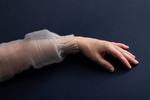
“In a first, the digital fiber contains memory, temperature sensors, and a trained neural network program for inferring physical activity. MIT researchers have created the first fiber with digital capabilities, able to sense, store, analyze, and infer activity after being …