

Other
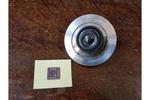
“A pioneering new technique that encourages the wonder material graphene to “talk” could revolutionise the global audio and telecommunications industries. Researchers from the University of Exeter have devised a ground-breaking method to use graphene to generate complex and controllable sound …
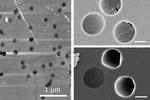
“A single sheet of graphene, comprising an atom-thin lattice of carbon, may seem rather fragile. But engineers at MIT have found that the ultrathin material is exceptionally sturdy, remaining intact under applied pressures of at least 100 bars. That’s …
“In 2016, annual global semiconductor sales reached their highest-ever point, at $339 billion worldwide. In that same year, the semiconductor industry spent about $7.2 billion worldwide on wafers that serve as the substrates for microelectronics components, which can be …
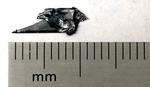
“Discovered more than 100 years ago, black phosphorus was soon forgotten when there was no apparent use for it. In what may prove to be one of the great comeback stories of electrical engineering, it now stands to play a …
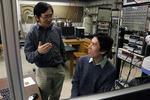
“Researchers have solved a problem hindering development of highly sensitive optical devices made of a material called graphene, an advance that could bring applications from imaging and displays to sensors and high-speed communications. Graphene is an extremely thin layer of …

“The experimental realization of ultrathin graphene – which earned two scientists from the University of Manchester, U.K., the Nobel Prize in physics in 2010 – has ushered in a new age in materials research. What started with graphene has evolved to …

“Two-dimensional materials, or 2D materials for short, are extremely versatile, although – or often more precisely because – they are made up of just one or a few layers of atoms. Graphene is the best-known 2D material. Molybdenum disulphide (a layer consisting …
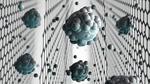
“The sought-after development could aid the millions of people without ready access to clean drinking water. The promising graphene oxide sieve could be highly efficient at filtering salts, and will now be tested against existing desalination membranes. It has previously …

“By capping liquids with graphene, an ultrathin sheet of pure carbon, researchers at the National Institute of Standards and Technology (NIST) and their colleagues have revitalized and extended a powerful technique to image surfaces. The graphene lids enable researchers for …

“A new way of harnessing the sun’s rays to power ‘synthetic skin’ could help to create advanced prosthetic limbs capable of returning the sense of touch to amputees. Engineers from the University of Glasgow, who have previously developed an …