

Other
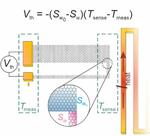
“A team of researchers from the University of Oxford, Delft University and IBM Zurich have demonstrated that graphene can be used to build sensitive and self-powering temperature sensors. The findings pave the way for the design of highly sensitive thermocouples …
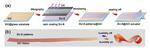
“Actuators that can convert various environmental stimuli to mechanical works have revealed great potential for developing smart devices such as soft robots, micro-electromechanical systems (MEMS), and automatic Lab-on-a-Chip systems. Generally, bilayer structures are widely used for design and fabrication of …
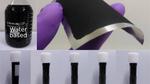
“Umeå researchers show how activated graphene, activated carbons and other hydrophobic carbons can be dispersed in water in a form of micrometer-sized particles. The key agent that helps to make these dispersions last for days is the oxidized form of …

“Liquid phase electron microscopy illuminates 3D atomic structures of platinum nanoparticles, advancing full control of nanoengineering. What do you see in the picture above (Figure 1)? Merely a precisely-drawn three-dimensional picture of nanoparticles? Far more than that, nanotechnologists will say …
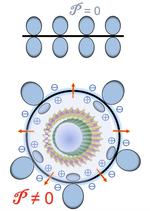
“Rice University calculations show they could be highly useful for solar panels One nanotube could be great for electronics applications, but there’s new evidence that two could be tops. Rice University engineers already knew that size matters when using …

“Device for harnessing terahertz radiation might enable self-powering implants, cellphones, other portable electronics. Any device that sends out a Wi-Fi signal also emits terahertz waves —electromagnetic waves with a frequency somewhere between microwaves and infrared light. These high-frequency radiation waves …
News It’s All about Carboneum: How Carbon-Based Materials Help Create Efficient and Safe Solar Cells

“Solar cells have already become a symbol of modern technologies and fight for the environment. At the same time, the solar power industry is always on the go: manufacturers strive to improve the efficiency of their devices, and scientists and …
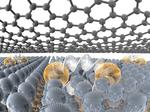
“An atomically thin materials platform developed by Penn State researchers in conjunction with Lawrence Berkeley National Lab and Oak Ridge National Lab will open a wide range of new applications in biomolecular sensing, quantum phenomena, catalysis and nonlinear optics. “We …
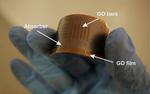
“Researchers at Swinburne, the University of Sydney and Australian National University have collaborated to develop a solar absorbing, ultrathin film with unique properties that has great potential for use in solar thermal energy harvesting. The 90 nanometre material is 1000 …
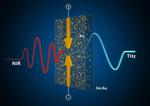
“Terahertz waves are becoming ever more important in science and technology. They enable us to unravel the properties of future materials, test the quality of automotive paint and screen envelopes. But generating these waves is still a challenge. A team …