

Other
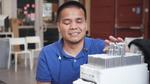
“Stanford researchers designed a tactile display that aims to make 3D printing and computer-aided design accessible to people who are blind and visually impaired. With the goal of increasing access to making, engineers at Stanford University have collaborated with members …
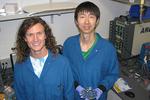
“A Stanford-led research team invented a new coating that could finally make lightweight lithium metal batteries safe and long lasting, which could usher in the next generation of electric vehicles. Hope has been restored for the rechargeable lithium metal battery …

“Made with ‘Jenga chemistry,’ the discovery could help crack the mystery of how high-temperature superconductors work. Menlo Park, Calif. — Scientists at the Department of Energy’s SLAC National Accelerator Laboratory and Stanford University have made the first nickel oxide material …

“Despite its abundance, water retains a great many secrets. Among them, Stanford chemists have discovered, is that water microdroplets spontaneously produce hydrogen peroxide. Water is everywhere on Earth, but maybe that just gives it more space to hide its secrets …

“Atomically thin materials developed by Stanford researchers could create heat-shields for cell phones or laptops that would protect people and temperature-sensitive components and make future electronic gadgets even more compact. Excess heat given off by smartphones, laptops and other electronic …
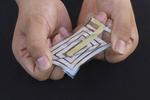
“Stanford engineers have developed experimental stickers that pick up physiological signals emanating from the skin, then wirelessly beam these health readings to a receiver clipped onto clothing. It’s all part of a system called BodyNet. We tend to take …
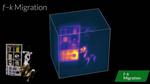
“By analyzing single particles of light, this camera system can reconstruct room-size scenes and moving objects that are hidden around a corner. This work could someday help autonomous cars and robots see better. David Lindell, a graduate student in electrical …
News Stanford researchers develop technology to harness energy from mixing of freshwater and seawater

“A new battery made from affordable and durable materials generates energy from places where salt and fresh waters mingle. The technology could make coastal wastewater treatment plants energy-independent and carbon neutral. Salt is power. It might sound like alchemy, but …
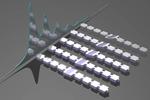
“A device that eavesdrops on the quantum whispers of atoms could form the basis of a new type of quantum computer. Stanford physicists have developed a “quantum microphone” so sensitive that it can measure individual particles of sound, called phonons …
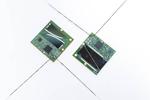
“A swarm of 105 tiny satellites the size of computer chips, costing under $100 each, recently launched into Earth’s orbit. Stanford scientist Zac Manchester, who dreamed up the ChipSats, said they pave the way for cheaper and easier space …