

Other

“Researchers have fashioned ultrathin silicon nanoantennas that trap and redirect light, for applications in quantum computing, LIDAR and even the detection of viruses. Light is notoriously fast. Its speed is crucial for rapid information exchange, but as light zips through …
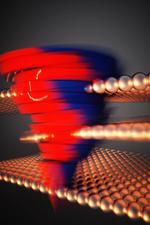
“Researchers have invented a way to slide atomically-thin layers of 2D materials over one another to store more data, in less space and using less energy. A Stanford-led team has invented a way to store data by sliding atomically thin …
News Stanford researchers one step closer toward enabling electric cars to recharge themselves wirelessly as they drive

“Engineers have demonstrated a practical way to use magnetism to transmit electricity wirelessly to recharge electric cars, robots or even drones. The technology could be scaled up to power electric cars as they drive over highways, robots on factory floors …
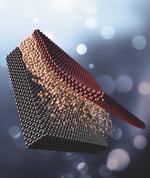
“Turning a brittle oxide into a flexible membrane and stretching it on a tiny apparatus flipped it from a conducting to an insulating state and changed its magnetic properties. The technique can be used to study and design a broad …
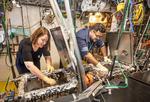
“Researchers have squeezed a high-energy electron beam into tight bundles using terahertz radiation, a promising advance in watching the ultrafast world of atoms unfold. Researchers from the Department of Energy’s SLAC National Accelerator Laboratory have made a promising new …

“Electronics are showing up everywhere: on our laps, in pockets and purses and, increasingly, snuggled up against our skin or sewed into our clothing. But the adoption of wearable electronics has so far been limited by their need to derive …

“For centuries, humans have been obsessed with flying. Aerospace engineers have long understood that birds can morph the shape of their wings to suit various flying patterns, such as takeoff, landing, and turning, but transforming that masterpiece of evolution into …
News Stanford researchers build a particle accelerator that fits on a chip, miniaturizing a technology that can now find new applications in research and medicine
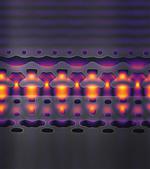
“Just as engineers once compressed some of the power of room-sized mainframes into desktop PCs, so too have Stanford researchers shown how to pack some of the punch delivered by today’s ginormous particle accelerators onto a tiny silicon chip …
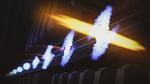
“Called XLEAP, the new method will provide sharp views of electrons in chemical processes that take place in billionths of a billionth of a second and drive crucial aspects of life. Researchers at the Department of Energy’s SLAC National …
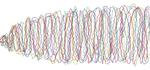
“Strange metals make interesting bedfellows for a phenomenon known as high-temperature superconductivity, which allows materials to carry electricity with zero loss. Both are rule-breakers. Strange metals don’t behave like regular metals, whose electrons act independently; instead their electrons behave …