

Other
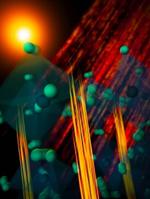
“Research conducted at the atomic scale could help explain how electric currents move efficiently through hybrid perovskites, promising materials for solar cells. Scientists have gained new insights into a fundamental mystery about hybrid perovskites, low-cost materials that could enhance or …
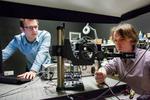
“Someday your self-driving car could react to hazards before you even see them, thanks to a laser-based imaging technology being developed by Stanford researchers that can peek around corners. A driverless car is making its way through a winding neighborhood …

“Experiments with ‘molecular anvils’ mark an important advance for mechanochemistry, which has the potential to make chemistry greener and more precise. Scientists have turned the smallest possible bits of diamond and other super-hard specks into “molecular anvils” that squeeze and …
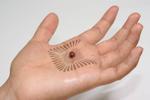
“Stanford researchers have set the stage for an evolution in electronics by taking the concept of ‘artificial skin’ to the next level, demonstrating not only a stretchable circuitry that can feel the touch of a ladybug, but a manufacturing process …
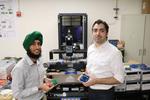
“A device that’s turned off doesn’t suck battery life, but it also doesn’t work. Now a low-power system that’s always on the alert can turn devices on when they are needed, saving energy in the networked …
“Electric car makers are intensely interested in lithium-rich battery cathodes that could significantly increase driving range. A new study opens a path to making them live up to their promise. If you add more lithium to the positive electrode of …
News Study Confirms that Cuprate Materials Have Fluctuating Stripes that May Be Linked to High-temperature Superconductivity
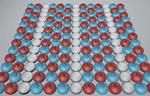
“These stripes of electron spin and charge are exciting because of their possible link to a phenomenon that could transform society by making electrical transmission nearly 100 percent efficient. Scientists at the Department of Energy’s SLAC National Accelerator Laboratory …
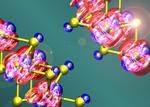
“In experiments with the lab’s ultrafast ‘electron camera,’ laser light hitting a material is almost completely converted into nuclear vibrations, which are key to switching a material’s properties on and off for future electronics and other applications. Materials …
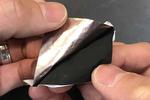
“Stanford researchers have developed a reversible fabric that, without expending effort or energy, keeps skin a comfortable temperature whatever the weather. close up of a sample of the textile separated to show the two inner layers of copper and carbon …
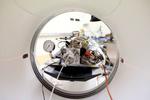
“As the world continues to burn 100 million barrels of oil a day – a rate that is expected to continue for the next 50 years – Stanford Earth researchers are developing greener ways of extracting the oil and mitigating the resulting …