

Other
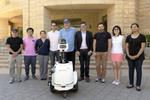
“Like its predecessor, JackRabbot 2 is learning how to navigate safely through spaces occupied by people, following the rules of human etiquette. What it learns could help it move comfortably among us in the future. If you’ve ever been …
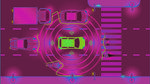
“Stanford engineers combine two types of computers to create a faster and less energy-intensive image processor for use in autonomous vehicles, security cameras and medical devices. The image recognition technology that underlies today’s autonomous cars and aerial drones depends …
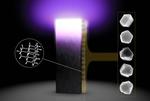
“A SLAC-Stanford study reveals exactly what it takes for diamond to crystallize around a “seed” cluster of atoms. The results apply to industrial processes and to what happens in clouds overhead. Natural diamond is forged by tremendous pressures and …
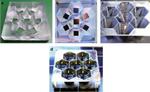
“Stanford researchers successfully manufactured high quality optical components using commercially available 3D printing materials. Researchers print optical surface (mirrors, arrays, lens molds), and coat it with a gel. Following curing, the optically smooth surface can be vacuum coated with Al …
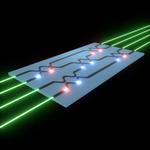
“Optical training of neural networks could lead to more efficient artificial intelligence Researchers have shown that it is possible to train artificial neural networks directly on an optical chip. The significant breakthrough demonstrates that an optical circuit can perform a …
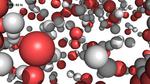
“Experiments at SLAC heated water from room temperature to 100,000 degrees Celsius in less than a millionth of a millionth of a second, producing an exotic state of water that could shed light on Earth’s most important liquid …
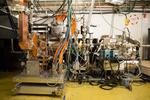
“A team including SLAC researchers has measured the intricate interactions between atomic nuclei and electrons that are key to understanding intriguing materials properties, such as high-temperature superconductivity. Manipulating the flow of energy through superconductors – materials that conduct electricity with 100 …

“Stanford scientists have developed a manganese-hydrogen battery that could fill a missing piece in the nation’s energy puzzle by storing wind and solar energy for when it is needed, lessening the need to burn carbon-emitting fossil fuels. Stanford researchers …

“Lasting just a few hundred billionths of a billionth of a second, these bursts offer new tool to study chemistry and magnetism. The Science Reactions in solar panels, catalytic converters, and other devices are governed by the quick motion of …
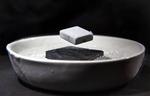
“Understanding strontium titanate’s odd behavior will aid efforts to develop materials that conduct electricity with 100 percent efficiency at higher temperatures. Until about 50 years ago, all known superconductors were metals. This made sense, because metals have the largest …