

Other
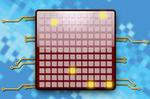
“Every undergraduate computer-science major takes a course on data structures, which describes different ways of organizing data in a computer’s memory. Every data structure has its own advantages: Some are good for fast retrieval, some for efficient search, some …
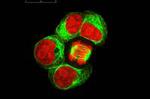
“Living cells are capable of performing complex computations on the environmental signals they encounter. These computations can be continuous, or analogue, in nature — the way eyes adjust to gradual changes in the light levels. They can also be digital, involving …
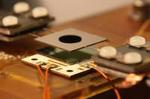
“A team of MIT researchers has for the first time demonstrated a device based on a method that enables solar cells to break through a theoretically predicted ceiling on how much sunlight they can convert into electricity. Ever since 1961 …
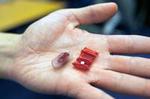
“In experiments involving a simulation of the human esophagus and stomach, researchers at MIT, the University of Sheffield, and the Tokyo Institute of Technology have demonstrated a tiny origami robot that can unfold itself from a swallowed capsule and, steered …
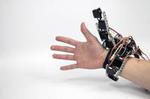
“We envision a machine-driven evolution of human body form and function, where the programmable nature of machines plays a crucial role. Robotic joints worn on the wrist turn into extra fingers so that a person acquires skills beyond what five …

“Innovation is rapidly becoming democratized. Users, aided by improvements in computer and communications technology, increasingly can develop their own new products and services. These innovating users — both individuals and firms — often freely share their innovations with others, creating user-innovation communities …

“It has long been assumed that new product innovations are typically developed by product manufacturers, an assumption that has inevitably had a major impact on innovation-related research and activities ranging from how firms organize their research and development to how …

“For many applications such as biomedical, mechanical, or environmental monitoring devices, harnessing the energy of small motions could provide a small but virtually unlimited power supply. While a number of approaches have been attempted, researchers at MIT have now developed …
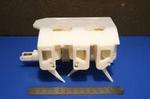
“One reason we don’t yet have robot personal assistants buzzing around doing our chores is because making them is hard. Assembling robots by hand is time-consuming, while automation — robots building other robots — is not yet fine-tuned enough to make …
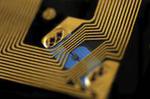
“MIT researchers have developed a new type of radio frequency identification (RFID) chip that is extremely difficult to hack. If such chips were widely adopted, it could mean that an identity thief couldn’t steal your credit card number or …