

Other
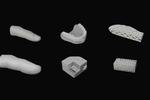
“MIT startup Inkbit is overcoming traditional constraints to 3-D printing by giving its machines “eyes and brains.” Objects made with 3-D printing can be lighter, stronger, and more complex than those produced through traditional manufacturing methods. But several technical challenges …

“Fleet of “roboats” could collect garbage or self-assemble into floating structures in Amsterdam’s many canals. The city of Amsterdam envisions a future where fleets of autonomous boats cruise its many canals to transport goods and people, collect trash, or …

“Signals help neural network identify objects by touch; system could aid robotics and prosthetics design. Wearing a sensor-packed glove while handling a variety of objects, MIT researchers have compiled a massive dataset that enables an AI system to recognize objects …

“New method could be useful for building quantum sensors and computers. The ultimate degree of control for engineering would be the ability to create and manipulate materials at the most basic level, fabricating devices atom by atom with precise control …

“Mechanical engineering researchers are inventing game-changing technologies and developing a Renaissance in 3-D printing. In the mid-15th century, a new technology that would change the course of history was invented. Johannes Gutenberg’s printing press, with its movable type, promoted …
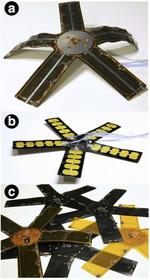
“Integrating sensors and actuators using flexible electronics Currently, the manufacturing of self-actuating and self-sensing robots requires non-standard manufacturing techniques and assembly steps to integrate electrical and mechanical systems. In this work, we developed a novel manufacturing technique, where such robots …
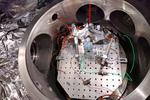
“Research could enable a new suite of experiments to measure quantum activity at room temperature. Minutes before dawn on Sept. 14, 2015, the Laser Interferometer Gravitational-wave Observatory (LIGO) became the first-ever instrument on Earth to directly detect a gravitational wave …

“Material may replace many metals as lightweight, flexible heat dissipators in cars, refrigerators, and electronics. Polymers are usually the go-to material for thermal insulation. Think of a silicone oven mitt, or a Styrofoam coffee cup, both manufactured from polymer materials …

“This week MIT’s Computer Science and Artificial Intelligence Laboratory (CSAIL) announced that a 20-year-old cryptographic puzzle was just solved by a self-taught programmer from Belgium, 15 years earlier than MIT scientists expected. Bernard Fabrot spent the last three and …
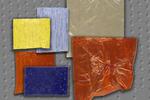
“Polymers could be designed to reflect or trap heat, regardless of hue. The color of a material can often tell you something about how it handles heat. Think of wearing a black shirt on a sweltering summer’s day — the …