

Other
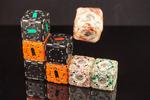
“Developed at MIT’s Computer Science and Artificial Intelligence Laboratory, robots can self-assemble to form various structures with applications including inspection. Swarms of simple, interacting robots have the potential to unlock stealthy abilities for accomplishing complex tasks. Getting these robots …

“Navigation method may speed up autonomous last-mile delivery. In the not too distant future, robots may be dispatched as last-mile delivery vehicles to drop your takeout order, package, or meal-kit subscription at your doorstep — if they can find the door …
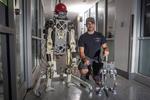
“New control system may enable humanoid robots to do heavy lifting and other physically demanding tasks. Rescuing victims from a burning building, a chemical spill, or any disaster that is inaccessible to human responders could one day be a mission …

“By sensing tiny changes in shadows, a new system identifies approaching objects that may cause a collision. To improve the safety of autonomous systems, MIT engineers have developed a system that can sense tiny changes in shadows on the ground …

“Materials could be useful for delivering drugs or imaging agents in the body; may offer alternative to some industrial plastics. MIT chemists have devised a way to synthesize polymers that can break down more readily in the body and in …

“Modeling web traffic could aid cybersecurity, computing infrastructure design, Internet policy, and more. Using a supercomputing system, MIT researchers have developed a model that captures what web traffic looks like around the world on a given day, which can be …

“Passive device relies on a layer of material that blocks incoming sunlight but lets heat radiate away. Imagine a device that can sit outside under blazing sunlight on a clear day, and without using any power cool things down by …
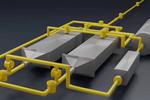
“The process could work on the gas at any concentrations, from power plant emissions to open air. A new way of removing carbon dioxide from a stream of air could provide a significant tool in the battle against climate change …
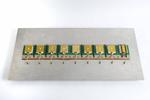
“In-band full-duplex techniques applied to a phased-array antenna may provide a tenfold speedup in data transmit and receive rates while supporting a rapidly increasing number of wireless devices. The use of wireless devices is exploding. Statista, an international research service …
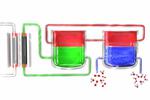
“MIT-developed method may lead to portable devices for making the disinfectant on-site where it’s needed. Hydrogen peroxide, a useful all-purpose disinfectant, is found in most medicine cabinets in the developed world. But in remote villages in developing countries …