

Other

“MIT CSAIL researchers say improving computing technology after Moore’s Law will require more efficient software, new algorithms, and specialized hardware. In 1965, Intel co-founder Gordon Moore predicted that the number of transistors that could fit on a computer chip …
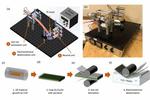
“New roll-to-roll production method could enable lightweight, flexible solar devices and a new generation of display screens. A new way of making large sheets of high-quality, atomically thin graphene could lead to ultra-lightweight, flexible solar cells, and to new classes …
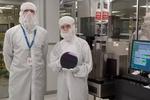
“Technique paves the way for more energy efficient, 3D microprocessors. Carbon nanotube transistors are a step closer to commercial reality, now that MIT researchers have demonstrated that the devices can be made swiftly in commercial facilities, with the same equipment …
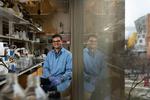
“Doctoral candidate Supratim Das wants the world to know how to make longer-lasting batteries that charge mobile phones and electric cars. Supratim Das’s quest for the perfect battery began in the dark. Growing up in Kolkata, India, Das saw …
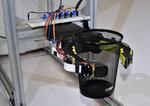
“In a pair of papers from MIT CSAIL, two teams enable better sense and perception for soft robotic grippers. One of the hottest topics in robotics is the field of soft robots, which utilizes squishy and flexible materials rather than …

“Three MIT teams to explore novel ways to reduce operations and maintenance costs of advanced nuclear reactors. Nuclear energy is a low-carbon energy source that is vital to decreasing carbon emissions. A critical factor in its continued viability as a …

“Modeling study shows battery reuse systems could be profitable for both electric vehicle companies and grid-scale solar operations. As electric vehicles rapidly grow in popularity worldwide, there will soon be a wave of used batteries whose performance is no longer …
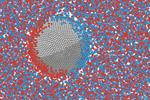
“Particle-scale phenomenon akin to the swerving of a curveball could allow selective separation of suspended nanomaterials. MIT researchers have discovered a phenomenon that could be harnessed to control the movement of tiny particles floating in suspension. This approach, which requires …

“Engineers develop a rapid screening system to test fracture resistance in billions of potential materials. For engineers developing new materials or protective coatings, there are billions of different possibilities to sort through. Lab tests or even detailed computer simulations to …
“Jagadeesh Moodera and colleagues to investigate interface-driven phenomena in quantum materials in the quest for energy-efficient quantum electronics. When ultrathin layered materials are coupled with other quantum materials having different properties, the resulting interface could produce a new quantum phenomenon …