

Other
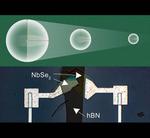
“Using ultrathin materials to reduce the size of superconducting qubits may pave the way for personal-sized quantum devices. Like the transistors in a classical computer, superconducting qubits are the building blocks of a quantum computer. While engineers have been able …
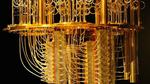
“Twist is an MIT-developed programming language that can describe and verify which pieces of data are entangled to prevent bugs in a quantum program. Time crystals. Microwaves. Diamonds. What do these three disparate things have in common? Quantum computing …
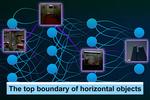
“A new method automatically describes, in natural language, what the individual components of a neural network do. Neural networks are sometimes called black boxes because, despite the fact that they can outperform humans on certain tasks, even the researchers who …

“The findings could redefine the kinds of particles that were abundant in the early universe. In the first millionths of a second after the Big Bang, the universe was a roiling, trillion-degree plasma of quarks and gluons — elementary particles that …
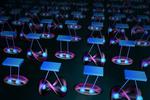
“The new qubits stay in “superposition” for up to 10 seconds, and could make a promising foundation for quantum computers. MIT physicists have discovered a new quantum bit, or “qubit,” in the form of vibrating pairs of atoms known as …
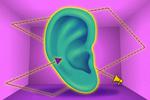
“MIT neuroscientists have developed a computer model that can answer that question as well as the human brain. The human brain is finely tuned not only to recognize particular sounds, but also to determine which direction they came from. By …
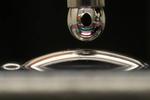
“Spread out or bead up? A new process enables control over liquid-solid interfaces even with the most unlikely pairs of materials. The wettability of a surface — whether drops of water or another liquid bead up or spread out when they …
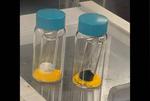
“Discovery allows scientists to study crucial intermediate in battery development. Lithium-air batteries were thought promising in the 1970s as a potential power source for electric vehicles, offering energy densities that rival gasoline and significantly surpass conventional lithium-ion batteries. However, scientists …
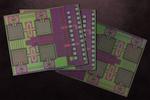
“MIT researchers lay out a strategy for how universities can help the U.S. regain its place as a semiconductor superpower. The global semiconductor shortage has grabbed headlines and caused a cascade of production bottlenecks that have driven up prices …

“The discovery could offer a route to smaller, faster electronic devices. In the particle world, sometimes two is better than one. Take, for instance, electron pairs. When two electrons are bound together, they can glide through a material without friction …