

Other
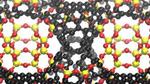
“The discovery of buckyballs surprised and delighted chemists in the 1980s, nanotubes jazzed physicists in the 1990s, and graphene charged up materials scientists in the 2000s, but one nanoscale carbon structure – a negatively curved surface called a schwarzite – has eluded …
“NUS and Boreal Space collaborate to examine how graphene reacts to extreme space conditions and explore its potential for satellite applications The Centre for Advanced Two-Dimensional Materials (CA2DM) at the National University of Singapore (NUS) has teamed up with US …
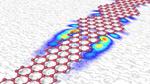
“Empa researchers, together with colleagues from the Max Planck Institute for Polymer Research in Mainz and other partners, have achieved a breakthrough that could in future be used for precise nanotransistors or – in the distant future – possibly even quantum computers …

“Scientists are experimenting with narrow strips of graphene, called nanoribbons, in hopes of making cool new electronic devices, but University of California, Berkeley scientists have discovered another possible role for them: as nanoscale electron traps with potential applications in quantum …
“Discovery may lead to more robust computer hard discs, TAU and Tsinghua University researchers say Lubricity measures the reduction in mechanical friction and wear by a lubricant. These are the main causes of component failure and energy loss in mechanical …
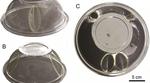
“Researchers develop a framework to encode mechanical memory in a featureless structure – an elastic shell. When Harry Potter and the Order of the Phoenix was translated into Braille, it spanned 1,000 pages over 14 volumes of thick Braille paper …
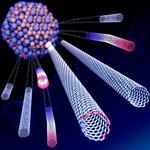
“Rice theorists find mechanism behind nearly pure nanotubes from the unusualcatalyst Growing a batch of carbon nanotubes that are all the same may not be as simple as researchers had hoped, according to Rice University scientists. Rice materials theorist Boris …
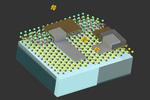
“Made of electronic circuits coupled to minute particles, the devices could flow through intestines or pipelines to detect problems. Researchers at MIT have created what may be the smallest robots yet that can sense their environment, store data, and even …

“An international team of scientists has discovered a new, exotic form of insulating material with a metallic surface that could enable more efficient electronics or even quantum computing. The researchers developed a new method for analyzing existing chemical compounds that …

“A new form of solar-powered supercapacitor could help make future wearable technologies lighter and more energy-efficient, scientists say. In a paper published in the journal Nano Energy, researchers from the University of Glasgow’s Bendable Electronics and Sensing Technologies (BEST …