

Other
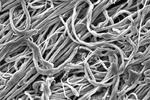
“New technique developed at MIT could produce strong, resilient nanofibers for many applications. Researchers at MIT have developed a process that can produce ultrafine fibers — whose diameter is measured in nanometers, or billionths of a meter — that are exceptionally strong …
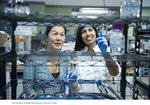
“New model measures characteristics of carbon nanotube structures for energy storage and water desalination applications. Using electrodes made of carbon nanotubes (CNTs) can significantly improve the performance of devices ranging from capacitors and batteries to water desalination systems. But figuring …
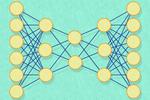
“Last month, three MIT materials scientists and their colleagues published a paper describing a new artificial-intelligence system that can pore through scientific papers and extract “recipes” for producing particular types of materials. That work was envisioned as the first step …
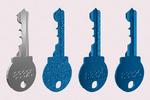
“For the past 10 years, the Camera Culture group at MIT’s Media Lab has been developing innovative imaging systems — from a camera that can see around corners to one that can read text in closed books — by using “time …

“Imagine that instead of switching on a lamp when it gets dark, you could read by the light of a glowing plant on your desk. MIT engineers have taken a critical first step toward making that vision a reality. By …
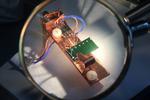
“Approach could bypass the time-consuming steps currently needed to test new photovoltaic materials. The worldwide quest by researchers to find better, more efficient materials for tomorrow’s solar panels is usually slow and painstaking. Researchers typically must produce lab samples …
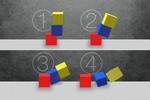
“Josh Tenenbaum, a professor of brain and cognitive sciences at MIT, directs research on the development of intelligence at the Center for Brains, Minds, and Machines, a multiuniversity, multidisciplinary project based at MIT that seeks to explain and replicate human …
“Don’t worry about supersmart AI eliminating all the jobs. That’s just a distraction from the problems even relatively dumb computers are causing. You’ve probably heard versions of each of the following ideas. 1. With computers becoming remarkably …
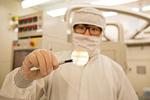
“New design could dramatically cut energy waste in electric vehicles, data centers, and the power grid. Power electronics, which do things like modify voltages or convert between direct and alternating current, are everywhere. They’re in the power bricks we …

“Technique illuminates the inner workings of artificial-intelligence systems that process language. Neural networks, which learn to perform computational tasks by analyzing huge sets of training data, have been responsible for the most impressive recent advances in artificial intelligence, including speech-recognition …