

Other

“Lincoln Laboratory’s microhydraulic actuators, thinner than a third of the width of human hair, are proving to be the most powerful and efficient motors at the microscale. Look around and you’ll likely see something that runs on an …
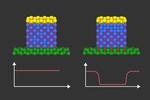
“Innovative approach to controlling magnetism could lead to next-generation memory and logic devices. A new approach to controlling magnetism in a microchip could open the doors to memory, computing, and sensing devices that consume drastically less power than existing versions …
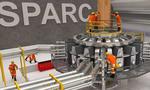
“Scientists are working to dramatically speed up the development of fusion energy in an effort to deliver power to the electric grid soon enough to help mitigate impacts of climate change. The arrival of a breakthrough technology—high-temperature superconductors, which …
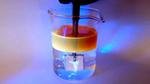
“New design could greatly extend the shelf life of single-use metal-air batteries for electric vehicles, off-grid storage, and other applications. Metal-air batteries are one of the lightest and most compact types of batteries available, but they can have a major …
“With a love for the environment that took root on his family’s farm, senior Jesse Hinricher aims to put less expensive components into more efficient batteries. Energy production can be expensive, or inefficient, or toxic to the environment — or …

“Novel surface design overcomes problem of condensation that bedeviled previous systems. “Omniphobic” might sound like a way to describe someone who is afraid of everything, but it actually refers to a special type of surface that repels virtually any liquid …
“MIT researchers have demonstrated that a Tungsten ditelluride-based transistor combines two different electronic states of matter. A transistor based on the 2-D material tungsten ditelluride (WTe2) sandwiched between boron nitride can switch between two different electronic states — one that conducts …
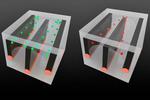
“Fibers containing systems for mixing, separating, and testing fluids may open up new possibilities for medical screening. Microfluidics devices are tiny systems with microscopic channels that can be used for chemical or biomedical testing and research. In a potentially game-changing …

“A faster, cheaper modeling method could improve our understanding of long-term atmospheric chemistry and provide a powerful tool for risk assessment. To assess long-range risks to food, water, energy and other critical natural resources, decision-makers often rely on Earth-system models …

“System that automatically identifies people moving around indoors could enable self-adjusting homes. Developing automated systems that track occupants and self-adapt to their preferences is a major next step for the future of smart homes. When you walk into a room …