

Other
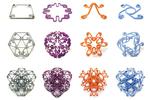
“The subunits could be robotically assembled to produce large, complex objects, including cars, robots, or wind turbine blades. Researchers at MIT’s Center for Bits and Atoms have created tiny building blocks that exhibit a variety of unique mechanical properties …
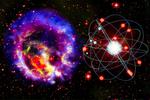
“Findings on short-range nuclear interactions will help scientists investigate neutron stars and heavy radioactive nuclei. Atoms in a gas can seem like partiers at a nanoscopic rave, with particles zipping around, pairing up, and flying off again in seemingly random …
“Inspired by camel fur, a new two-layered material could provide extended cooling to preserve the freshness of perishable goods. Camels have evolved a seemingly counterintuitive approach to keeping cool while conserving water in a scorching desert environment: They have a …
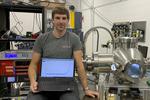
“MIT Energy Fellow David Fischer irradiates high-temperature superconducting tape to test its resilience and prepare for the first pilot fusion plant. “At the age of between 12 and 15 I was drawing; I was making plans of fusion devices.” David …
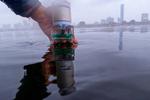
“New approach could spark an era of battery-free ocean exploration, with applications ranging from marine conservation to aquaculture. GPS isn’t waterproof. The navigation system depends on radio waves, which break down rapidly in liquids, including seawater. To track undersea …
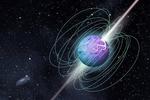
“The fast radio bursts are likely generated by a magnetar, the most magnetic type of star in the universe. Fast radio bursts are extremely bright flashes of energy that last for a fraction of a second, during which they can …
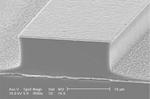
“The instrument could bring powerful sensing and imaging capabilities out of the lab and into hospitals, airports, or other settings. Researchers at MIT and the University of Waterloo have developed a high-power, portable version of a device called a quantum …
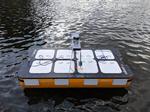
“Five years in the making, MIT’s autonomous floating vessels get a size upgrade and learn a new way to communicate aboard the waters. The feverish race to produce the shiniest, safest, speediest self-driving car has spilled over into our …
“Nicholas Demos, a first-generation college graduate and MathWorks Fellow in MIT’s Kavli Institute, is improving our ability to listen to the cosmos. Nicholas Demos, a physics graduate student, didn’t travel a conventional path to MIT. A first-generation college …
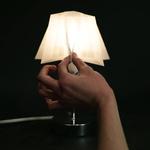
“Sometimes 3D printers mess up. They extrude too much material, or too little, or deposit material in the wrong spot. But what if this bug could be turned into a (fashionable) feature? Introducing DefeXtiles, a tulle-like textile that MIT Media …