

Other
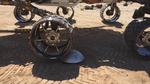
“There are no mechanics on Mars, so the next best thing for NASA’s Curiosity rover is careful driving. A new algorithm is helping the rover do just that. The software, referred to as traction control, adjusts the speed of …
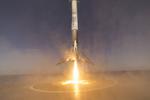
“After a slight delay, a used SpaceX Falcon 9 rocket is scheduled to make its second trip to space today (June 23) to orbit the first communications satellite for Bulgaria. The BulgariaSat-1 launch will mark the Falcon 9’s second …
“Artificial intelligence is changing how we study Mars. A.I. software on NASA’s Curiosity Mars rover has helped it zap dozens of laser targets on the Red Planet this past year, becoming a frequent science tool when the ground …
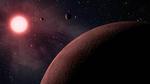
“NASA’s Kepler space telescope team has released a mission catalog of planet candidates that introduces 219 new planet candidates, 10 of which are near-Earth size and orbiting in their star’s habitable zone, which is the range of distance …
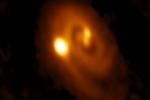
“Did our Sun have a twin when it was born 4.5 billion years ago? Almost certainly yes — though not an identical twin. And so did every other Sun-like star in the universe, according to a new analysis by a …
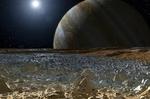
“Our local gas giant has two more natural satellites added to its roster. The planet Jupiter is a beast: Three-hundred-and-seventeen times the mass of the Earth, mostly made of metallic hydrogen, and at the center of an astonishing collective of …
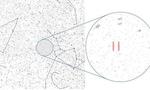
“A team of researchers with the Center of Planetary Science (CPS) has finally solved the mystery of the “Wow!” signal from 1977. It was a comet, they report, one that that was unknown at the time of the signal discovery …
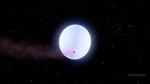
“A newly discovered Jupiter-like world is so hot, it’s being vaporized by its own star. With a dayside temperature of more than 7,800 degrees Fahrenheit (4,600 Kelvin), KELT-9b is a planet that is hotter than most …
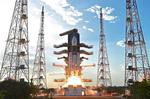
“The first developmental flight (GSLV MkIII-D1) of India’s heavy lift launch vehicle GSLV Mk-III was successfully conducted today (June 05, 2017) evening from Satish Dhawan Space Centre SHAR, Sriharikota with the launch of GSAT-19 satellite. This was …
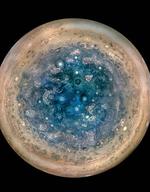
“Early science results from NASA’s Juno mission to Jupiter portray the largest planet in our solar system as a complex, gigantic, turbulent world, with Earth-sized polar cyclones, plunging storm systems that travel deep into the heart of the gas …