

Other
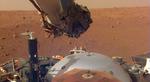
“New images from NASA’s Mars InSight lander show its robotic arm is ready to do some lifting. With a reach of nearly 6 feet (2 meters), the arm will be used to pick up science instruments from the lander …
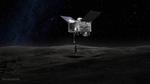
“On Dec. 3, after traveling billions of kilometers from Earth, NASA’s OSIRIS-REx spacecraft reached its target, Bennu, and kicked off a nearly two-year, up-close investigation of the asteroid. It will inspect nearly every square inch of this ancient …
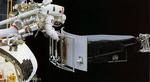
“Twenty-five years ago this week, NASA held its collective breath as seven astronauts on space shuttle Endeavour caught up with the Hubble Space Telescope 353 miles (568 kilometers) above Earth. Their mission: to fix a devastating flaw in the telescope …
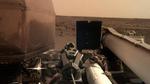
“NASA’s InSight has sent signals to Earth indicating that its solar panels are open and collecting sunlight on the Martian surface. NASA’s Mars Odyssey orbiter relayed the signals, which were received on Earth at about 5:30 p …
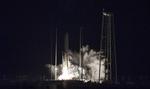
“Northrop Grumman’s Cygnus spacecraft is on its way to the International Space Station with about 7,400 pounds of cargo after launching at 4:01 a.m. EST Saturday from NASA’s Wallops Flight Facility on Virginia’s Eastern …
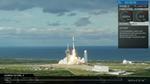
“A pre-flown SpaceX Falcon 9 rocket has aced another launch-and-landing mission. The two-stage Falcon 9 lifted off at 3:46 p.m. EST (2046 GMT) today (Nov. 15) from Launch Complex 39A at NASA’s Kennedy Space Center in Florida …

“Elon Musk’s SpaceX won permission to deploy more than 7,000 satellites, far more than all operating spacecraft currently aloft, from U.S. regulators who also moved to reduce a growing risk from space debris as skies grow more …
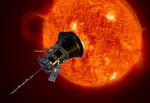
“Parker Solar Probe now holds the record for closest approach to the Sun by a human-made object. The spacecraft passed the current record of 26.55 million miles from the Sun’s surface on Oct. 29, 2018, at about 1 …
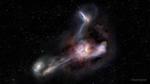
“The most luminous galaxy ever discovered is cannibalizing not one, not two, but at least three of its smaller neighbors, according to a new study published today (Nov. 15) in the journal Science and coauthored by scientists from NASA’s …
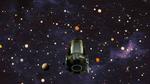
“After nine years in deep space collecting data that indicate our sky to be filled with billions of hidden planets - more planets even than stars - NASA’s Kepler space telescope has run out of fuel needed for further science operations …